
Cracks, chips, and pitting can make any patio look past its prime. If your outdoor space has seen better days, you might wonder whether a fresh coating will fix the problem—or if the damage is simply too far gone. The good news? Most concrete patios can be restored, even ones that look rough on the surface.
In this post, we'll break down what makes concrete a good candidate for a coating, which types of damage can be repaired, and when it's time to consider a full replacement instead. By the end, you'll know exactly where your patio stands and what your next step should be.
Key Takeaways
- Most patio concrete—even with cracks, chips, or surface wear—can be repaired and coated rather than replaced.
- Serious structural issues like deep heaving, major settling, or crumbling concrete may require replacement before a coating can be applied.
- A professional inspection is the best way to know for certain whether your patio is a good candidate for patio floor coatings.
What Makes Concrete a Good Candidate for a Coating?
Not all damage is created equal. Surface-level wear looks alarming, but it rarely affects whether a coating will bond and last. The real question is whether the underlying slab is still structurally sound.
Concrete that's a good candidate for patio floor coatings usually has:
- A stable, level base without significant shifting or sinking
- Cracks that are cosmetic or minor rather than deep structural fractures
- No ongoing moisture problems pushing up from below
- A surface that can be cleaned, repaired, and properly prepped
If your slab checks these boxes, chances are high that a coating will give it years of renewed life.
Which Types of Patio Damage Can Be Repaired?
You'd be surprised how much damage a skilled contractor can fix before applying a coating. Here are the most common issues that don't require a full replacement.
Surface Cracks
Hairline and small surface cracks are extremely common, especially in older patios. These form naturally as concrete cures and settles over time. A professional can fill and smooth these cracks during prep, creating a seamless base for the new coating.
Chips and Spalling
Spalling happens when the top layer of concrete flakes or peels away, often due to freeze-thaw cycles or de-icing salts. As long as the damage stays in the upper layer, the surface can be patched and resurfaced without issue.
Pitting and Rough Texture
Pitting leaves small holes and an uneven texture across the slab. This is a cosmetic problem, not a structural one. Repair and resurfacing smooth everything out before the coating goes on.
Discoloration and Staining
Oil stains, rust marks, and general discoloration might make your patio look permanently ruined—but they're purely aesthetic. A quality coating covers these blemishes completely, giving you a clean, uniform finish.
When Is Concrete Too Damaged to Coat?
Some problems go deeper than the surface. In these cases, a coating alone won't solve the issue, and replacement may be the smarter long-term investment.
Watch for these warning signs:
- Deep structural cracks: Wide cracks that continue to grow signal movement in the slab or foundation below.
- Significant heaving or settling: If sections of your patio have lifted or sunk unevenly, the base is unstable.
- Crumbling or flaking throughout: Concrete that breaks apart when touched has lost its integrity.
- Persistent moisture issues: Water constantly pushing up through the slab will cause any coating to fail over time.
If your patio shows several of these signs, a coating applied over the top will only mask the problem temporarily. Addressing the root cause first saves you money and frustration down the road.
How Can You Tell for Sure?
Self-inspection gives you a general idea, but concrete damage isn't always what it seems. A crack that looks minor might hide a bigger problem, while a patio that appears wrecked could be perfectly coatable after proper prep.
The most reliable way to know is a professional assessment. At Maverick Concrete Coatings, we evaluate the slab's condition, moisture levels, and structural stability before recommending the right solution. This ensures your patio floor coatings Glasgow KY investment lasts for years, not months.
Get Your Patio Back in Shape
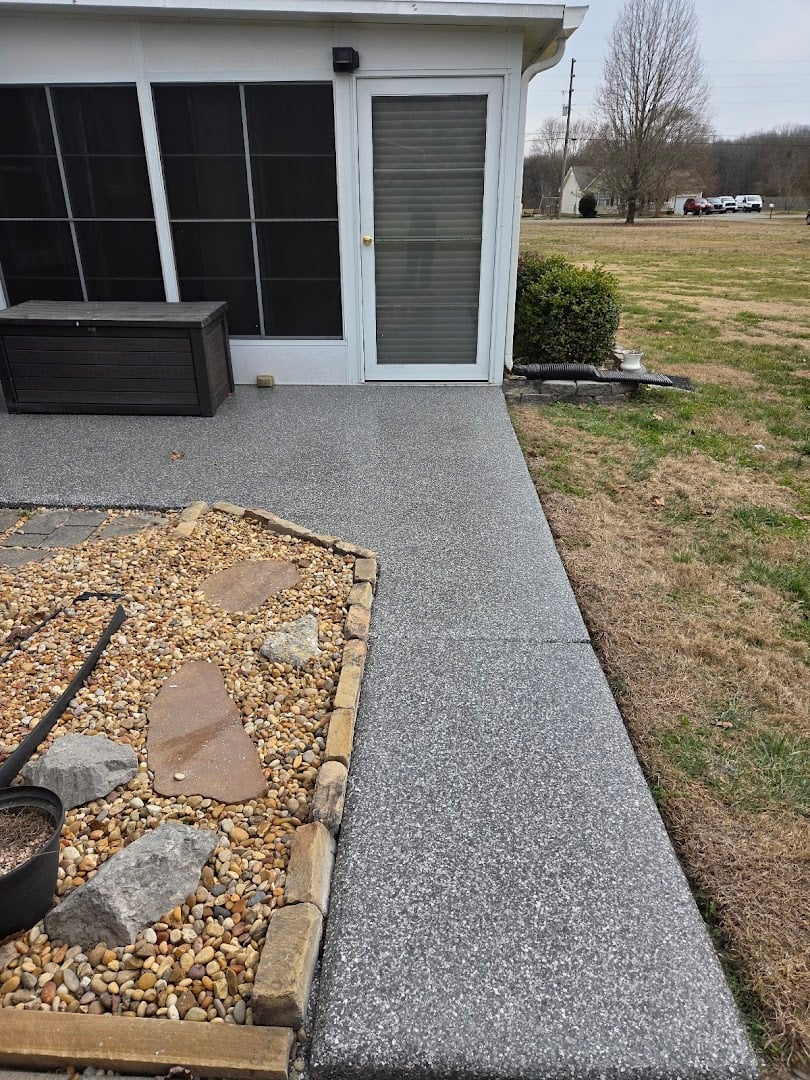
A damaged patio doesn't automatically mean a costly tear-out and replacement. Most concrete—even slabs that look worn and weathered—can be repaired, prepped, and coated to look brand new. The key is knowing the difference between cosmetic damage and true structural failure.
If you're unsure about your patio's condition, don't guess. Reach out to Maverick Concrete Coatings for a professional evaluation, and let's determine the best path forward for your outdoor space. A durable, great-looking patio might be closer than you think.
Frequently Asked Questions
Can you put a coating over cracked concrete?
Yes, in most cases. Minor and cosmetic cracks are filled and repaired during surface prep before the coating is applied. Only deep, growing structural cracks tend to require more extensive repair or replacement first.
How do I know if my patio needs replacing instead of coating?
Look for signs of structural failure: wide cracks that keep growing, uneven heaving or settling, concrete that crumbles when touched, or persistent moisture pushing through the slab. If several of these are present, replacement may be the better option.
How long do patio floor coatings last?
A professionally installed coating on a sound, well-prepped slab can last many years. Longevity depends on the quality of the prep work, the coating system used, and how well the surface is maintained.
Is it worth coating an old patio?
Absolutely. Coating an older patio is often far more affordable than replacement, and it restores both durability and appearance. As long as the slab is structurally sound, a coating is a smart, cost-effective upgrade.